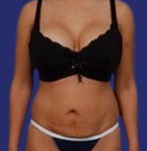
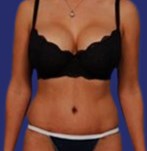
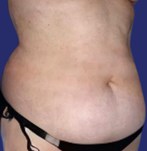
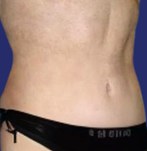
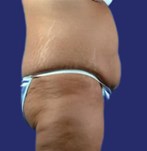
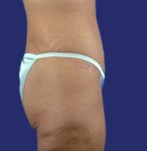
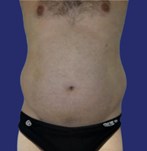
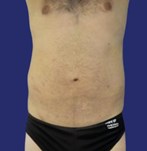
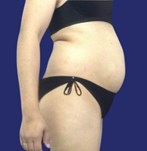
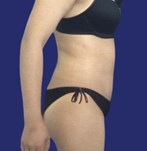
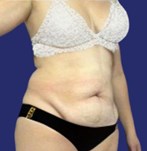
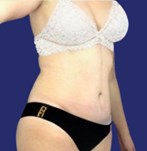
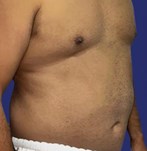
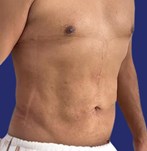
With a (full or traditional) abdominoplasty (tummy tuck), the excess skin on your abdomen is pulled downwards, and the main incision runs horizontally across the lower abdomen, from hip to hip. The surgeon places this incision as low as possible – just above the pubic hairline, in the natural crease or along the bikini line – so that the scar can later be concealed beneath underwear or a bikini.
This allows the surgeon to remove excess skin from your lower abdomen and tighten the skin downwards. The navel is also usually repositioned. This technique is particularly suitable if you have excess skin below the navel, weakened abdominal muscles and a sagging abdominal wall following pregnancy or weight loss.
With a reverse abdominoplasty or reverse tummy tuck (reverse tummy tuck), the excess skin on your abdomen is pulled upwards, and the main incision runs horizontally underneath your breasts. This allows the surgeon to remove the excess skin and tighten the skin upwards.
This tummy lift often produces the best results for men and women who have lost a significant amount of weight, for example after gastric bypass surgery, through weight-loss pills, injections or strict dieting. The reverse abdominoplasty technique is particularly suitable when the skin in the upper abdomen (around the diaphragm and stomach area) has become very loose and sagging, resulting in folds of skin. A reverse abdominoplasty (reverse tummy tuck), in which the abdominal skin is lifted upwards, generally provides the best results in terms of improving the body contour and silhouette in these cases.